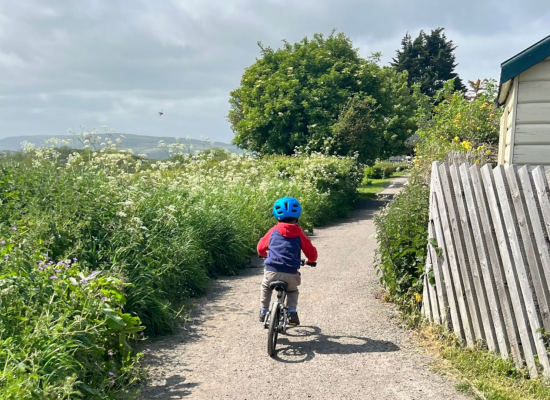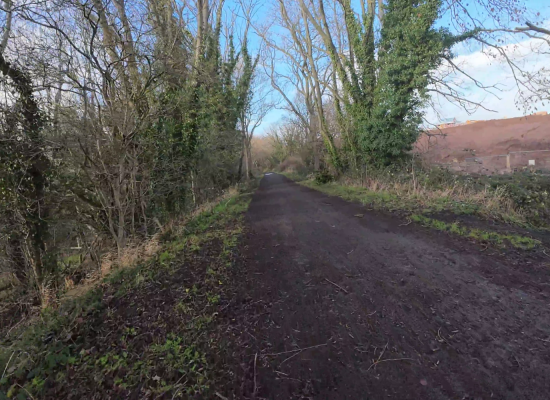
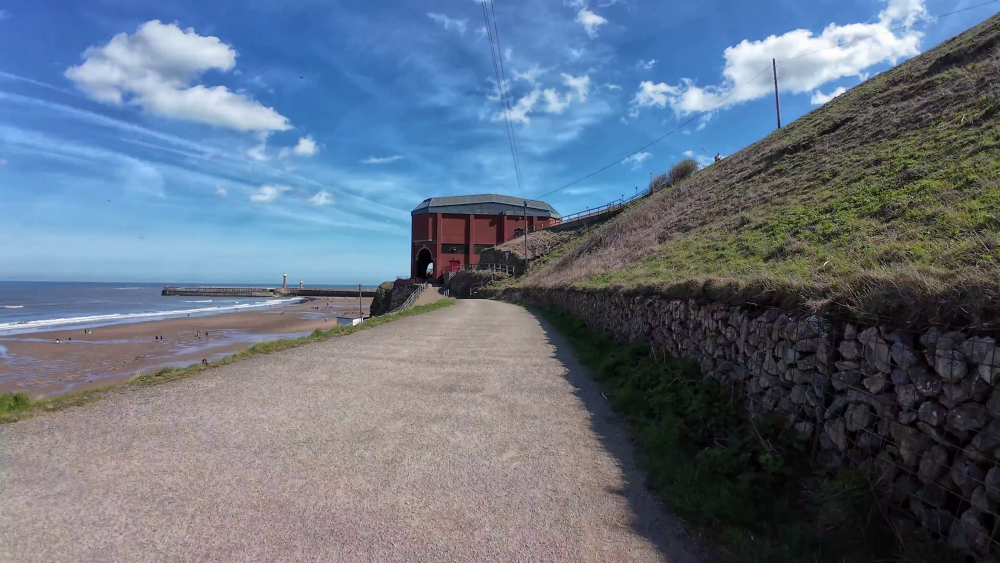
A recent audit of access to Whitby West Cliff beach revealed many failings. Amongst these was the poor level of pedestrian access to the sea wall and beach area, with the lowest gradient paths heading underneath Whitby Pavilion, but a considerable distance (300m) from the closest disabled parking.
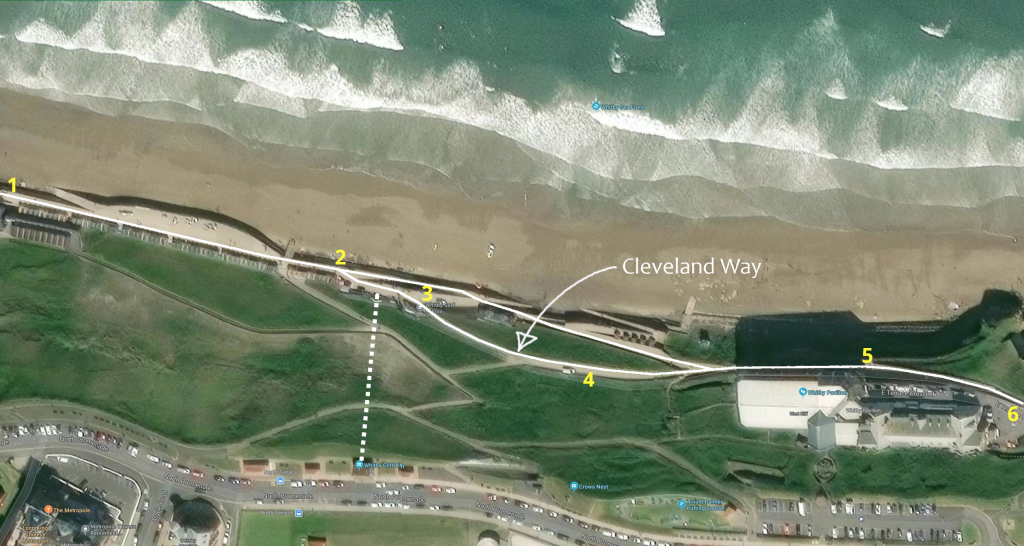
Recently a member of the public requested a (memorial) bench on the flat part of the Cleveland Way before it descends past the Surf School down to the sea wall. The Cleveland Way (a designated National Trail) and various points of reference are marked on the map below. The bench was requested at position 4 on this map.
The response from North Yorkshire Council (NYC) to this request was as follows
“The Council is unable to approve the installation of a memorial bench at the requested position. The pathway is required to accommodate vehicle access and the introduction of a bench at this location would create safety and accessibility concerns.”
Let’s make our own assessment of NYC’s concerns about the relative safety and accessibility at different points, with particular reference to guidelines from the Department for Transport and Active Travel England.
Relative Safety / Accessibility
Let’s examine different positions along the Cleveland Way path as well as the lower path with respect to safety and accessibility.
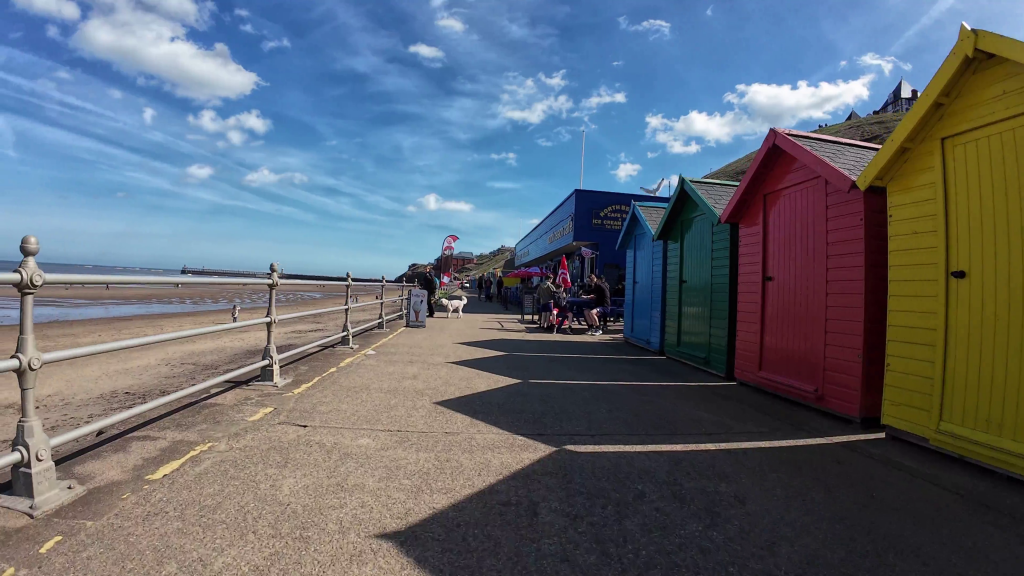
At position 1, nr the Beach Cafe Bar, there is a constant flow of pedestrians, dogs, and some cyclists. The width in front of the beach huts, and the beach cafe / office is around 4m. With people stood against the railing it is maybe 3m, and where the tables are and where the advertising boards are for the cafe more like 2.5m.
If you consider this section from the perspective of a beach hut user, from inside the beach hut they have no visibility of vehicles approaching from either side, and then step out of the door!
The safety risk from vehicles coming along this section is high.
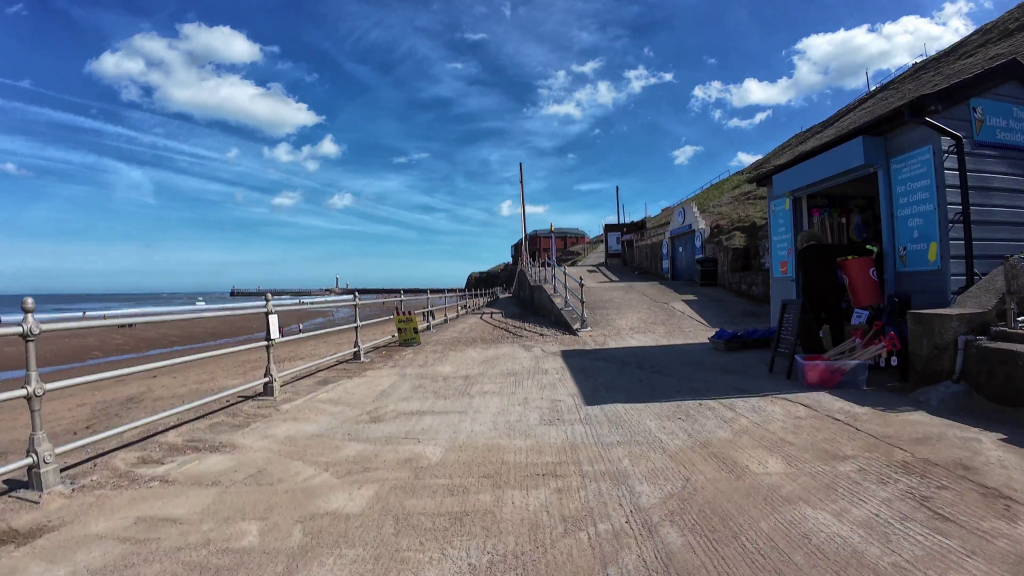
At position 2, nr the kiosk at the foot of the slope up the Cleveland Way, the space for vehicles is only 2.5m, and there are often customers at the kiosk.
The safety risk from vehicles coming along this section is high.
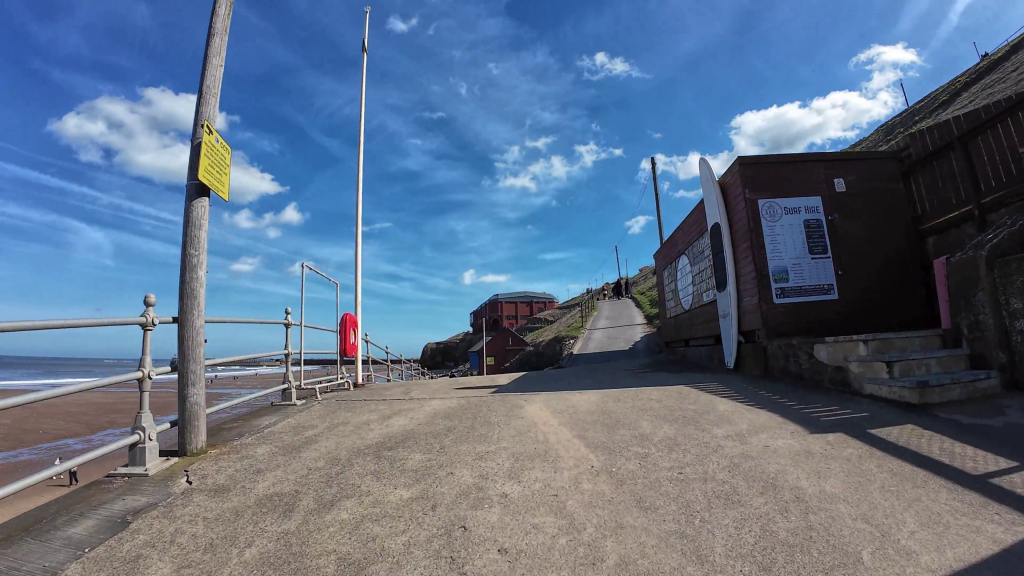
At position 3, we have the Surf School, with surfboards often taking up space on the left, and wet suits hanging up on the right. Customers are often in this space, trying on wet suits, or enquiring about a lesson. The risk from vehicles from above is significant since from the door of the surf school hut there is no visibility. The width of the path coming down is 2.5m.
The safety risk from vehicles coming along this section is again high.
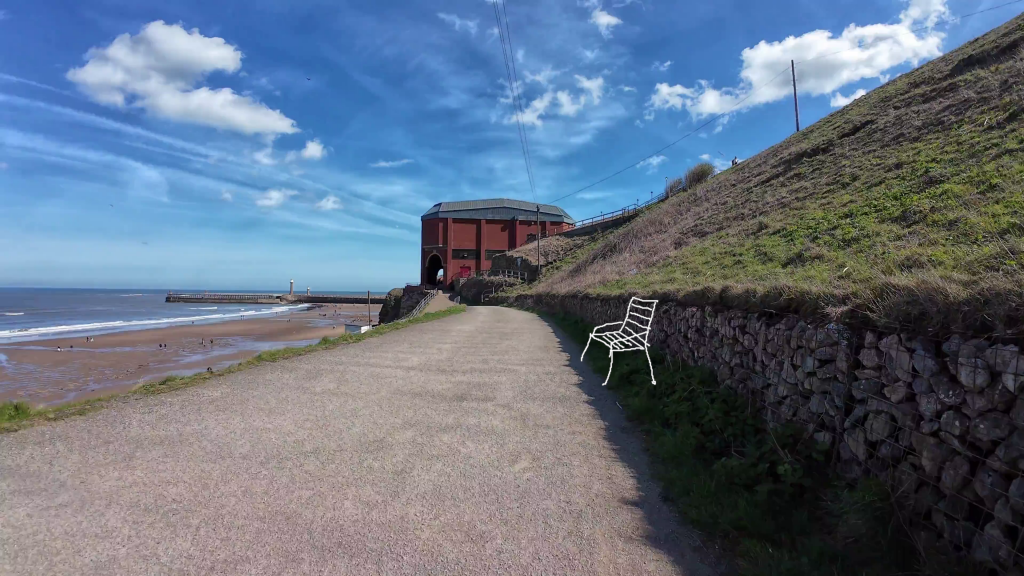
At position 4, where the bench was requested, we have added a bench to scale. A bench occupies around 1.8m wide by 0.6m depth. If it was placed up against the engineering cages of rocks it would still provide around 4m of space in front of a pedestrian using the bench for a vehicle to pass – the widest vehicle able to get down here would be less than 2.5m wide. In fact the bench would only occupy the amount of space currently taken up by the overgrown vegetation that NYC has negated to cut back during the last 5 years. Additionally, a pedestrian using the bench would be able to see vehicles coming from both directions, and so the risk is mitigated to a degree.
The safety risk from vehicles coming along this section would be medium-high, and certainly safer than the sections with beach huts.
Accessibility Guidelines
Benches / resting points along active travel routes are strongly recommended – see this guide by Active Travel England.
“Benches and resting places invite people to sit, dwell and enjoy their surroundings. They are an integral part of well-designed active places. Benches can encourage people to walk, wheel and cycle more and for longer distances, by enhancing their journeys and creating more inclusive spaces.”
The access route along the Cleveland Way to reach the Whitby sea wall / promenade is currently not meeting any of these guidelines. There are no benches to be seen. Given that the path is on a slope towards the Whitby Pavilion, that increases the requirement for resting places, which are not present currently. Active Travel England’s guidance is being ignored.
If we then look at the Department for Transport’s “Inclusive Mobility : making transport accessible for passengers and pedestrians”, we have
“4.5 Seating
Mobility impaired people need seating at reasonably frequent intervals. In commonly used pedestrian areas, and transport interchanges and stations, seats should be provided at intervals of no more than 50 metres. Seating should be placed adjacent to, but not obstructing, the pedestrian route and should be picked out in contrasting colours to help people with visual impairment.”
Along the distance from position 2 to position 6 (300m) we have no benches or resting places – never mind having one every 50m! If we also look at the path slightly to the north of the Cleveland Way, that also has no benches or resting places. The DfT guidelines are being totally ignored, and mobility impaired people are not being catered for at all. This is frankly appalling and needs addressing.
Summary
The crux of the issue here is what priority do pedestrians get on this section of the Cleveland Way relative to vehicles. They should take precedence, but NYC have already admitted (when the issue of campervans parking on the sea wall was raised) that it is not classified as “highway”. So what is it classified as? and how does cycling fit in?
The addition of benches / resting points in the position requested is seemingly being rejected with a flawed assessment of the relative safety. If it is considered “safe” to have beach huts, kiosks and a surf school alongside this path, why is it not “safe” to have a few benches? A cynic would say that a beach hut and a surf school brings in money, but a bench for pedestrians does not.
Until NYC address the issue of accessibility in this area, and follows the guidance of the DfT, they would fail any accessibility assessment.